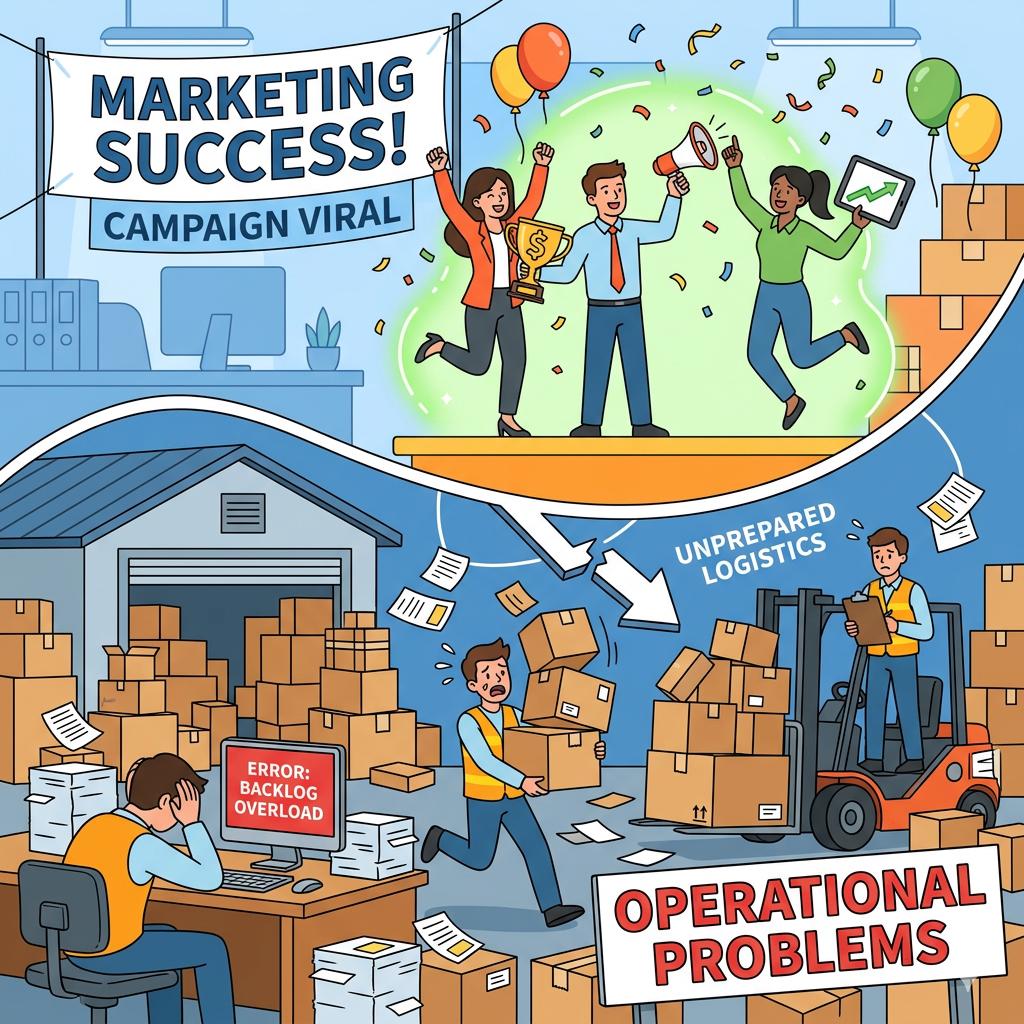
هل التسويق ينتهي عند جذب العميل؟ الفجوة بين التسويق وإدارة العمليات
في كثير من الشركات يُنظر إلى التسويق باعتباره المسؤول عن جذب الانتباه، وزيادة الطلب، وتحويل المهتمين إلى عملاء.
حملة ناجحة، تفاعل مرتفع، عدد كبير من الاستفسارات، وطلبات تتدفق بشكل مستمر… فتبدو الصورة مثالية.
لكن ماذا يحدث عندما تنجح الحملة أكثر من المتوقع؟
هنا تبدأ مرحلة لا تظهر في التقارير التسويقية:
الرسائل تزداد.
الطلبات تتراكم.
العملاء ينتظرون الرد.
الفريق التشغيلي يحاول التعامل مع كل شيء في الوقت نفسه.
وبدلًا من أن يتحول النجاح التسويقي إلى نمو فعلي، تبدأ الشركة بخسارة جزء من أثر هذا النجاح بسبب ضعف التنسيق بين التسويق والعمليات.
المشكلة ليست في الحملة، ولا في عدد العملاء. المشكلة أن التسويق حرّك الطلب بينما العمليات لم تكن مستعدة لاستيعابه.
التسويق يصنع الفرصة… والعمليات تحدد ما يحدث بعدها
قد تنجح في الوصول إلى آلاف الأشخاص، لكن الوصول وحده لا يصنع تجربة ناجحة. ماذا يحدث بعد أن يرسل العميل استفساره؟
من يتابعه؟
كم يستغرق الرد؟
هل المعلومات التي وصلته من التسويق متطابقة مع ما يستطيع فريق التنفيذ تقديمه؟
هل توجد آلية واضحة لتحويل العميل من مرحلة الاهتمام إلى التعاقد ثم الخدمة؟
هذه التفاصيل قد تبدو تشغيلية، لكنها تؤثر بشكل مباشر على نتائج التسويق.
أين تظهر الفجوة بين التسويق والعمليات؟
غالبًا تظهر في التفاصيل الصغيرة:
التسويق يطلق حملة دون معرفة الطاقة الاستيعابية للفريق.
العمليات تستقبل طلبات لم تُجهَّز آلية التعامل معها.
المبيعات تحصل على بيانات غير مكتملة.
خدمة العملاء تواجه أسئلة لم تستعد لها.
والإدارة تكتشف المشكلة بعد أن يبدأ العميل بالشكوى.
كل قسم قد يؤدي دوره بشكل جيد، لكن غياب التنسيق يجعل النتيجة النهائية أقل من المتوقع.
ما الذي تحتاجه الشركة قبل إطلاق أي حملة؟
١. تحديد القدرة الاستيعابية
كم عميلًا يستطيع الفريق التعامل معه دون التأثير على جودة الخدمة؟
٢. توحيد الرسائل
يجب أن تكون الوعود التسويقية متوافقة مع الخدمة التي تستطيع الشركة تقديمها فعليًا.
٣. تجهيز رحلة العميل
من أول إعلان أو تواصل، حتى المتابعة والتعاقد والتنفيذ وخدمة ما بعد البيع.
٤. ربط البيانات
معلومات العملاء والطلبات يجب أن تكون واضحة وقابلة للمتابعة بين الفرق المختلفة.
٥. خطة للتعامل مع زيادة الطلب
نجاح الحملة قد يضاعف عدد العملاء المحتملين خلال فترة قصيرة، ولذلك يجب أن تكون العمليات مستعدة لهذا السيناريو.
العلامة التي تستحق الانتباه
إذا بدأت تلاحظ أن:
الحملات تجلب اهتمامًا كبيرًا لكن التحويلات منخفضة.
العملاء ينتظرون وقتًا طويلًا للحصول على الرد.
المبيعات تتلقى عملاء غير مؤهلين.
الفريق التشغيلي لا يعرف مصدر الطلبات أو أولوياتها.
عدد العملاء المحتملين يرتفع بينما رضا العملاء ينخفض.
فقد لا تكون المشكلة في التسويق نفسه، بل في المسافة بين التسويق وما يحدث خلف الكواليس.
النمو الحقيقي يحتاج أكثر من حملة ناجحة
التسويق يستطيع أن يفتح الباب أمام العميل، لكن العمليات هي التي تحدد ما إذا كانت الشركة قادرة على استقباله بالشكل الصحيح.
ولهذا، لا يجب أن تعمل الإدارات كجزر منفصلة؛ فالحملة التسويقية، والمبيعات، وخدمة العملاء، والتنفيذ، كلها مراحل ضمن رحلة واحدة للعميل.
كلما كان الترابط بينها أقوى، أصبحت الشركة أكثر قدرة على تحويل الاهتمام إلى فرص، والفرص إلى عملاء، والعملاء إلى علاقات مستمرة.
وهي الفكرة نفسها التي ناقشناها من زاوية المبيعات في مقال وجه المبيعات المظلم: متى تصبح زيادة العملاء خطرًا على شركتك؟
الخلاصة
التسويق الناجح ليس فقط أن تجعل الناس يتحدثون عن شركتك، والعمليات الناجحة ليست فقط أن تنجز المهام في وقتها. القيمة الحقيقية تظهر عندما يعمل الاثنان معًا: فالتسويق يجذب الفرصة، والعمليات تجهّز الشركة لاستثمارها.
وعندما يلتقي التخطيط التسويقي مع الكفاءة التشغيلية، لا تصبح الحملة مجرد موجة من الطلبات، بل تتحول إلى نمو يمكن للشركة استيعابه والاستمرار فيه.
أسئلة شائعة
كيف أعرف القدرة الاستيعابية لفريقي قبل إطلاق الحملة؟
اضرب عدد أفراد الفريق في عدد المحادثات أو المكالمات التي يستطيع كل فرد إنهاءها بجودة في الساعة، ثم في ساعات العمل. إذا كان الطلب المتوقع من الحملة أعلى من هذا الرقم، فأنت تحتاج دعمًا إضافيًا قبل الإطلاق لا بعده.
ما المؤشرات التي تكشف الفجوة بين التسويق والعمليات؟
زمن أول رد على الاستفسار، ونسبة تحويل الاستفسارات إلى عملاء، ونسبة الاستفسارات التي لم يُرد عليها، ورضا العملاء بعد الخدمة. ارتفاع عدد الاستفسارات مع تراجع هذه المؤشرات علامة واضحة على الفجوة.
ماذا أفعل إذا كان فريقي لا يستوعب ضغط الحملة؟
يمكن إطلاق الحملة على مراحل بدل دفعة واحدة، أو الاستعانة بفريق خارجي يستقبل الاستفسارات ويرد عليها خلال فترة الذروة، مثل خدمة العملاء من 92 التقنية.
In many companies, marketing is seen as the team responsible for grabbing attention, growing demand and turning interested people into customers.
A successful campaign, strong engagement, a flood of enquiries and a steady stream of orders… the picture looks perfect.
But what happens when a campaign succeeds more than expected?
This is where a stage begins that never shows up in marketing reports:
Messages pile up.
Orders stack up.
Customers wait for a reply.
The operations team tries to handle everything at once.
Instead of turning marketing success into real growth, the company starts losing part of that success because marketing and operations are not working in step.
The problem is not the campaign, nor the number of customers. The problem is that marketing created demand while operations were not ready to absorb it.
Marketing creates the opportunity… operations decide what happens next
You may reach thousands of people, but reach alone does not create a good experience. What happens after a customer sends an enquiry?
Who follows up?
How long does the reply take?
Does what marketing promised match what the delivery team can actually provide?
Is there a clear path that takes the customer from interest to contract to service?
These details may look operational, but they directly affect marketing results.
Where does the gap between marketing and operations show up?
Usually in the small details:
Marketing launches a campaign without knowing how much the team can handle.
Operations receive requests they have no process for.
Sales get incomplete lead data.
Customer service faces questions nobody prepared them for.
And management discovers the problem only after customers start complaining.
Each department may be doing its job well, but without coordination the end result falls short of expectations.
What does a company need before launching any campaign?
1. Know your capacity
How many customers can the team handle without hurting service quality?
2. Align the message
Marketing promises must match the service the company can actually deliver.
3. Prepare the customer journey
From the first ad or contact, through follow-up, contract and delivery, to after-sales service.
4. Connect the data
Customer and order information must be clear and easy to track across teams.
5. Plan for a surge in demand
A successful campaign can multiply leads within a short period, so operations must be ready for that scenario.
The warning sign worth watching
If you start noticing that:
Campaigns attract strong interest but conversions stay low.
Customers wait a long time for a reply.
Sales receive unqualified leads.
The operations team doesn't know where requests come from or which come first.
Leads go up while customer satisfaction goes down.
then the problem may not be marketing itself, but the distance between marketing and what happens behind the scenes.
Real growth takes more than a successful campaign
Marketing can open the door to the customer, but operations decide whether the company can welcome them properly.
That is why departments should not work as separate islands: the campaign, sales, customer service and delivery are all stages of one customer journey.
The stronger the links between them, the better the company becomes at turning interest into opportunities, opportunities into customers, and customers into lasting relationships.
It is the same idea we explored from the sales side in The dark side of sales: when growing your customer base becomes a risk.
The bottom line
Successful marketing is not only about getting people to talk about your company, and successful operations are not only about finishing tasks on time. The real value appears when the two work together: marketing attracts the opportunity, and operations prepare the company to make the most of it.
When marketing planning meets operational efficiency, a campaign stops being just a wave of requests and becomes growth the company can absorb and sustain.
Frequently asked questions
How do I know my team's capacity before launching a campaign?
Multiply the number of team members by the conversations or calls each person can complete well per hour, then by working hours. If the demand you expect from the campaign is higher than that number, you need extra support before the launch, not after it.
Which metrics reveal the gap between marketing and operations?
Time to first reply, the share of enquiries that become customers, the share of enquiries left unanswered, and customer satisfaction after the service. Rising enquiries alongside falling metrics are a clear sign of the gap.
What if my team can't handle the pressure of a campaign?
Launch the campaign in phases instead of all at once, or bring in an external team to receive and answer enquiries during the peak, such as 92 Technology's customer service.

تريد بناء منظومة تستوعب نموّك؟
تحدّث مع فريق 92 عبر واتساب.